DEXA Scan vs. Calipers and BMI: The Science Has Moved On
For decades, calipers and BMI were the default tools for measuring body composition and assessing health risk. They're cheap, they're fast, and they're still used in gyms, doctor's offices, and military fitness tests around the world. They're also both built on assumptions that break down in exactly the situations where accuracy matters most. Calipers only measure the fat you can physically pinch — subcutaneous fat just under the skin. They completely miss visceral fat, the fat stored around your organs that carries the highest metabolic risk. And their accuracy depends entirely on who's doing the pinching. BMI is simpler still: it divides your weight by the square of your height and maps the result to a category. It has no way to distinguish muscle from fat, and no way to identify where in your body fat is actually stored. In January 2025, The Lancet Diabetes & Endocrinology published a report by 58 experts calling for a shift away from BMI toward more accurate measures of obesity, including direct body fat measurements. That report was endorsed by 76 organizations worldwide. DEXA doesn't estimate. It directly measures fat, lean muscle, and bone — by region, with a margin of error of 1-2% — in under 15 minutes. Here's how the comparison actually stacks up.
How Calipers Work
Skinfold calipers estimate body fat by pinching the skin at specific sites — typically the tricep, subscapular, suprailiac, and thigh — and measuring the thickness of the fold. Those measurements get plugged into a population-based formula that predicts total body fat percentage from subcutaneous fat at those sites.
It's a reasonable approximation under ideal conditions. When used consistently by a skilled technician, duplicate measurements can differ by no more than 2mm, with an intrarater reliability of approximately 0.944. That's the best-case scenario.
In practice, several variables degrade that accuracy:
Technician skill
Small errors in pinching technique can lead to large errors in estimated body fat percentage. The same person measured by two different technicians can get meaningfully different results.
Higher body fat percentages
Accuracy varies widely depending on the tester and results can be off by several percentage points, especially when body fat is higher or fat distribution is uneven.
What they can't reach
Calipers measure subcutaneous fat only. Calipers miss visceral fat entirely — the fat wrapped around your liver, heart, and intestines.
Tracking change over time
Calipers struggle to detect small changes over time, making progress tracking unreliable. A 1-2% change in body fat falls within the noise of a caliper measurement.
How BMI Works — and Why It Doesn't
BMI is a formula: weight in kilograms divided by height in meters squared. The result maps to four categories — underweight, normal, overweight, obese — that were developed in the 1830s by a Belgian mathematician studying population statistics. It was never designed as an individual diagnostic tool.
The problem isn't that BMI is wrong about everything. It's that it's right about averages and wrong about individuals in ways that matter clinically.
BMI is based on height and weight, so it doesn't account for crucial factors like muscle mass, fat distribution, and overall body composition. This can lead to misleading outcomes, where individuals with high muscle mass are labeled as overweight or obese, while others with unhealthy levels of visceral fat might fall within the normal BMI range.
The scale of the problem is significant. By BMI criteria, obesity prevalence in the US was 43% in 2021–2023. By criteria that incorporate actual body fat percentage and distribution, that number rises to 61% — meaning BMI misses nearly one in five people who would be classified as obese under a more complete assessment. Those people aren't aware they're at risk, because their BMI number looks fine.
of US adults classified as obese when using direct fat measurements — vs. 43% under BMI criteria. BMI misses nearly 1 in 5 people at risk.
The Lancet Commission's 58 experts emphasized that BMI has real limitations — a person may have a high BMI but be fairly healthy, while another person may have a normal BMI but carry dangerous levels of visceral fat. The commission recommended using fat mass measurements rather than BMI alone to diagnose obesity.
BMI also tells you nothing about where your fat is stored, how much muscle you have, or whether your bone density is declining. Two people with identical BMI scores can have radically different body compositions and radically different health trajectories.
How DEXA Measures Body Composition
A DEXA scanner passes two low-dose X-ray beams through your body. Because fat, lean tissue, and bone absorb X-rays at different rates, the scanner identifies each tissue type directly — not by inference, not by formula, not by measuring something else and working backward. The result is a precise, three-compartment breakdown:
- Total body fat percentage, measured directly
- Lean muscle mass by region: left arm, right arm, trunk, left leg, right leg
- Visceral adipose tissue (VAT) — measured directly, not estimated
- Bone mineral density with clinical T-scores
- Left-to-right muscle symmetry
DEXA's ability to measure fat you cannot see or feel is what sets it apart. The scan detects fat stored around internal organs, imbalances between left and right sides of your body, and changes in specific regions over time — transforming body composition from a vague concept into measurable, trackable data.
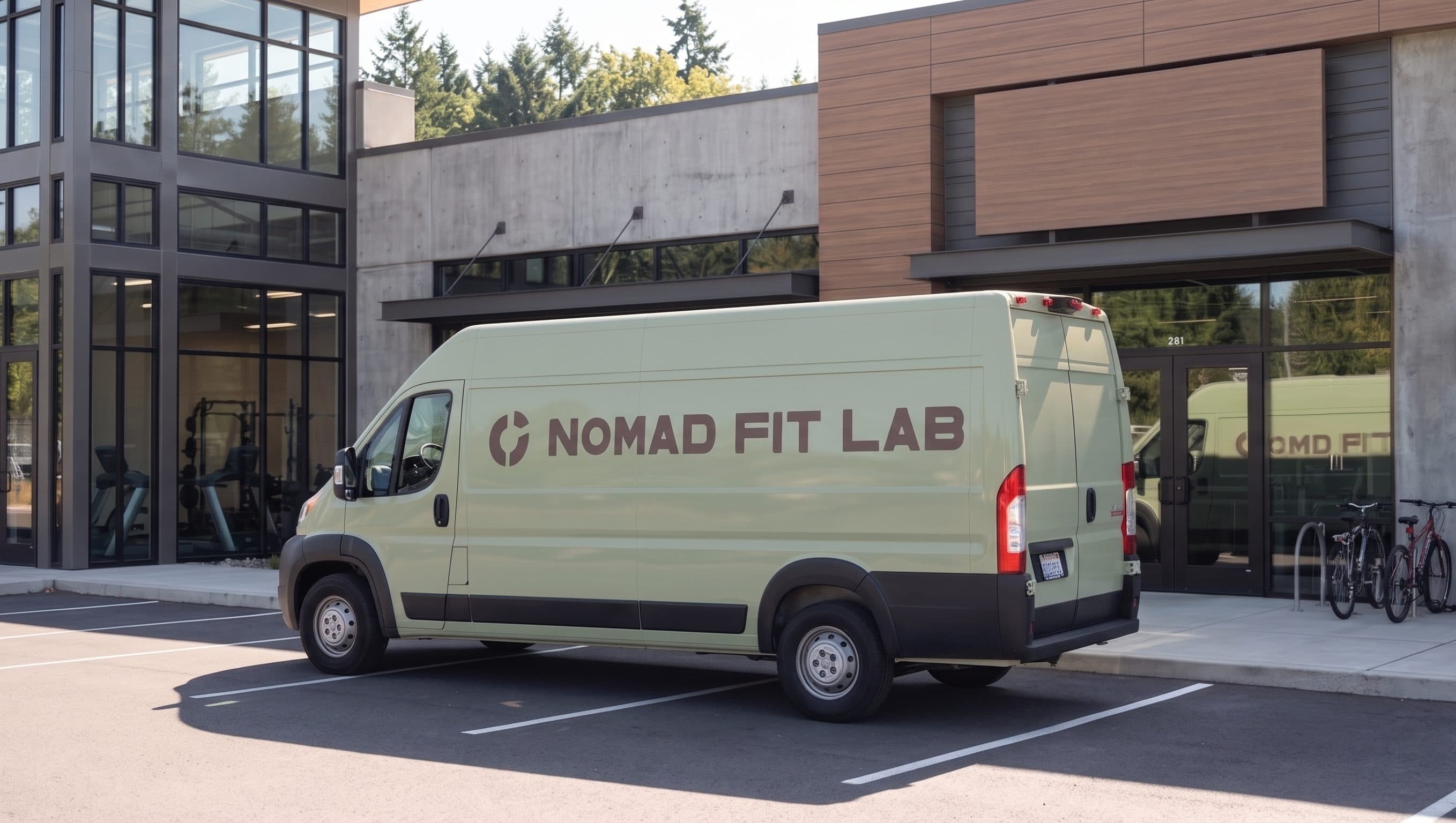
Nomad Fit Lab brings the scanner to your gym or neighborhood across Western Washington and Greater Phoenix. $39.95, under 15 minutes, results in your inbox the same day.
DEXA vs. Calipers vs. BMI: Side-by-Side
| Metric | DEXA Scan | Skinfold Calipers | BMI |
|---|---|---|---|
| Method | Dual-energy X-ray | Subcutaneous pinch sites | Height and weight formula |
| Fat Mass Error | ~1-2% | ±3.5-5% (technician-dependent) | Does not measure fat |
| Visceral fat | Measured directly | Not measurable | Not measurable |
| Bone density | Yes - clinical T-scores | No | No |
| Regional breakdown | Full-body map | No | No |
| Distinguishes muscle from fat | Yes | Partially | No |
| Operator-dependent | No | Yes - significantly | No |
| Clinically validated | Yes | Limited | Increasingly questioned |
| Cost | From $39.95 | $10-$30 per session | Free |
When Calipers Are Still Useful
Calipers aren't worthless in every context. In a controlled research setting where the same trained technician measures the same person under the same conditions at consistent intervals, calipers can track directional trends over time. They're portable, inexpensive, and don't require any equipment beyond the tool itself.
For broad population screening in environments where DEXA isn't accessible, calipers remain a practical option — as long as the results are treated as approximate and the limitations are understood.
Where they fall apart is precision at the individual level, any situation involving visceral fat, and any measurement of bone density or regional muscle balance.
When the Difference Actually Matters
You're an athlete or highly muscular
BMI will frequently misclassify you. Calipers can produce meaningful errors when fat distribution is uneven or muscle mass is high. DEXA doesn't care — it measures what's actually there.
You're at a healthy weight but concerned about metabolic risk
Normal BMI with high visceral fat is one of the most clinically significant blind spots in standard health assessment. It's common, it's dangerous, and neither BMI nor calipers will find it. DEXA measures visceral fat directly.
You're tracking the results of a training or nutrition program
Calipers struggle to detect small changes over time. A 1-2% shift in body fat percentage is within the noise of a caliper measurement. DEXA reliably detects changes that small.
You're over 50 or have bone health concerns
Neither calipers nor BMI provide any information about bone mineral density. DEXA provides a clinical T-score — the number your doctor needs to evaluate osteoporosis risk.
You're on GLP-1 medication
People on Ozempic, Wegovy, or Mounjaro lose both fat and muscle mass during rapid weight loss. BMI shows your weight dropping. Neither tells you how much of the loss is muscle. DEXA gives you the full picture.
Everything You Need to Know
Are calipers accurate for measuring body fat?
Calipers can produce reasonably accurate results under controlled conditions with a skilled technician, but their margin of error ranges from ±3.5–5% and increases with higher body fat percentages and uneven fat distribution. They measure subcutaneous fat only — they cannot access visceral fat, which is the fat most associated with metabolic disease. Results also vary significantly depending on who performs the measurement.
Is BMI a good measure of body composition?
BMI measures the relationship between height and weight — it does not measure body composition. It cannot distinguish muscle from fat, identify where fat is stored, or detect visceral fat. In January 2025, The Lancet Diabetes & Endocrinology Commission, comprising 58 experts endorsed by 76 organizations worldwide, formally called for moving away from BMI as a standalone measure of obesity toward direct fat mass measurement.
Can you be a normal BMI but have dangerous levels of body fat?
Yes. This is called normal weight obesity, or sometimes "skinny fat," and it's more common than BMI-based screening suggests. A person with low muscle mass and high visceral fat can fall within a normal BMI range while carrying significant metabolic risk. DEXA is one of the only accessible tools that can identify this.
What's the difference between subcutaneous fat and visceral fat?
Subcutaneous fat sits beneath the skin and is the fat calipers can measure. Visceral fat surrounds your internal organs — liver, heart, intestines — and is independently associated with cardiovascular disease, insulin resistance, and metabolic syndrome, even at a normal total body weight. DEXA measures visceral adipose tissue directly. Calipers and BMI cannot.
How often should I get a DEXA scan?
For most people who are not making major changes to diet or activity level, every 3–6 months gives you reliable data to track meaningful changes in body composition, bone density, and visceral fat. If you're on a GLP-1 medication or actively tracking a training program, every 6–8 weeks gives you the resolution to make real-time adjustments.
Is DEXA safe?
Yes. DEXA uses a very low dose of X-ray radiation — significantly less than a standard chest X-ray and comparable to a few hours of natural background radiation. It is not recommended during pregnancy, and we advise not getting a DEXA scan for at least 2 weeks following any medical/diagnostic radiation exposure.
Stop Estimating. Start Measuring.
Nomad Fit Lab is a mobile DEXA scan lab serving Western Washington and Greater Phoenix. We bring gold-standard body composition scans directly to your gym or neighborhood. The scan measures bone density, lean muscle mass by region, body fat percentage, visceral fat, and resting metabolic rate. From $39.95, under 15 minutes, with results in your inbox the same day.